At home
A note instead of a shouting match
A Muse who thinks a house rule is unfair is more likely to write it down than shout it. It might be a careful message to a parent, sent from the next room, with a gentler idea for how the rule could work. Parents may call them the easy one.
The cost is that their own needs can go quiet at home. A Muse might not mention a bad day at school or work because the house already felt tense that night.
Some carry a whole speech in their head about something they wish their family would see. It gets rewritten in the shower and on the way to school, and delivered rarely.
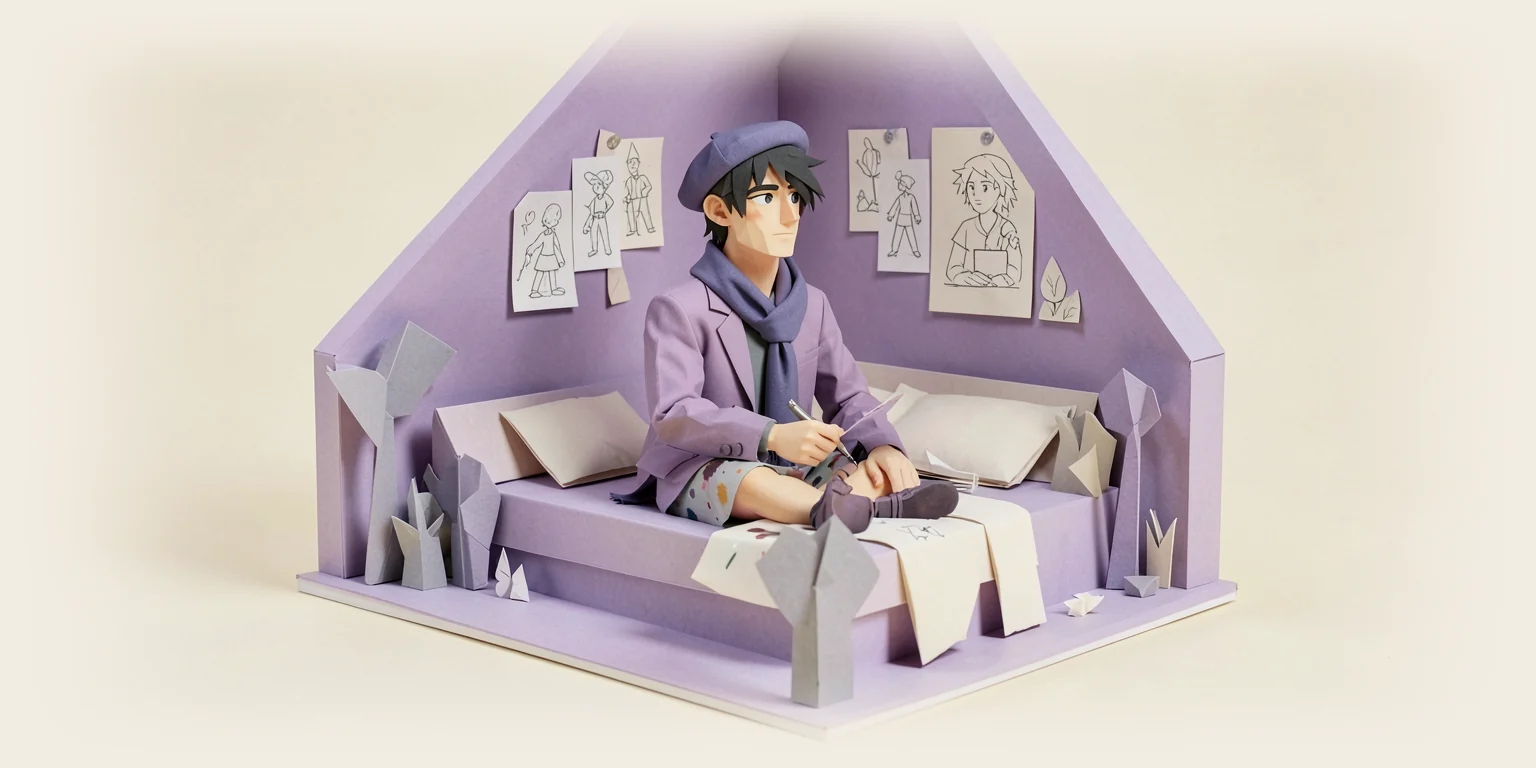
A room full of unfinished worlds
Postcards cover one wall of a Muse’s room, and a project started with great hope sits half done on the floor. A parent sees clutter. The Muse sees things that mean something, each with a story attached.
Chores can go either way. If the job helps someone, they do it with care, and a sibling who’s had a bad week might find their share already done. If the job feels pointless, like folding the same towels again, their mind wanders and the job takes ages. Being told off for daydreaming can sting, because the daydream was usually about something kind. A parent who asks about the postcards, instead of just the mess, can get the story behind each one.
Made their little brother a sign for his bedroom door, and left blue paint on the hallway carpet.
Giving ground, then one small dish
A Muse will share the last biscuits with a sibling and let a borrowed jumper go missing without a word. Underneath, they may be keeping a count of the times they gave way.
When an argument does come, it can be over something tiny. A dish left in the sink ends up carrying weeks of things that went unsaid. Muses dislike shouting and may leave the room mid-sentence, with the real point still unsaid.
Home feels right to them when people are kind in small ways. A snack saved for them counts. So does a sibling who asks about their day and then waits for the answer.