Friendships
Close by the end of the night
One party can give a Bard a new best friend. They meet someone in the kitchen, end up on the stairs swapping secrets, and follow each other on everything before the lift home. Their openness invites the other person to open up too, and the closeness they feel is real.
The other person may not move at the same pace. A Bard can wake up sure they’ve found someone important and get a polite “was fun!” back. That gap can sting for days. They may go quiet and hurt before checking how the other person felt. That person might only be slow to wake up, still in bed with their phone on charge.
They go first, so others can
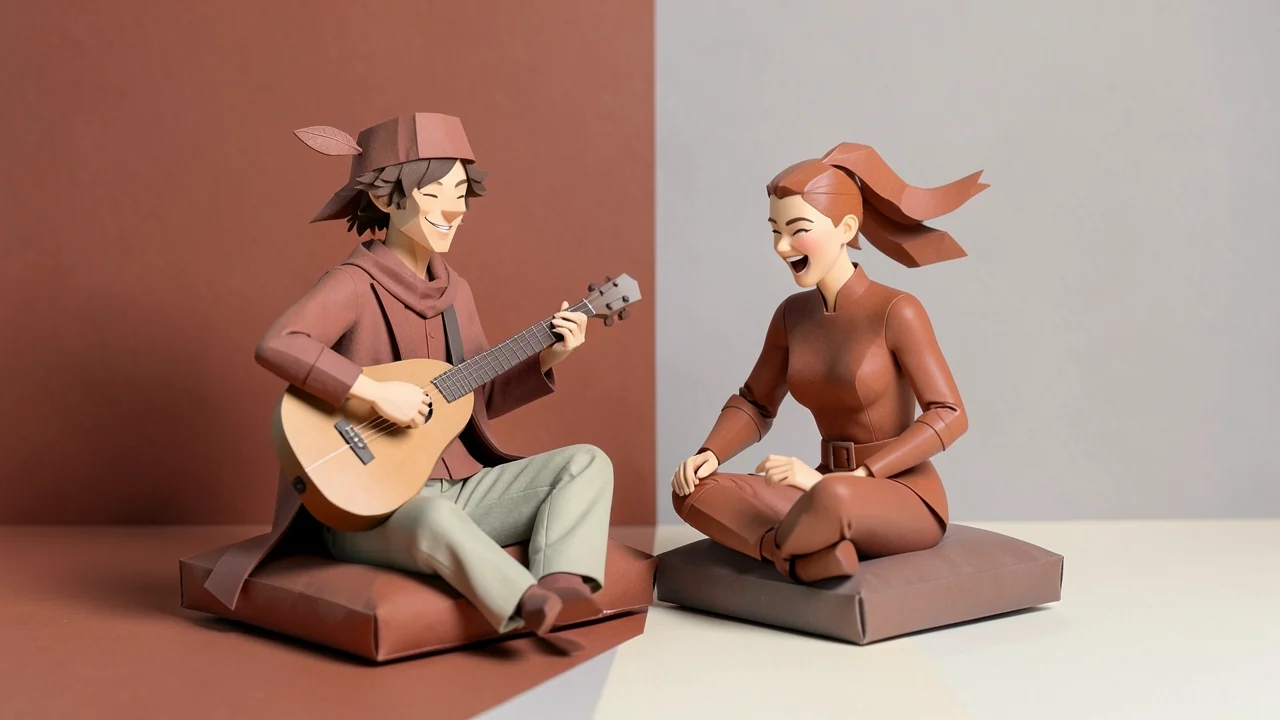
A Bard makes honesty easy for friends by going first. They’ll say “I’ve been really low this week” over a shared bowl of popcorn, and suddenly the friend can say it too. Friends love that nothing has to be guessed. They love how loudly a Bard takes their side, with gasps in the right places and a “no, they did not” when the story gets good.
The same openness means friends hear a lot of feelings, sometimes several in one afternoon. A Bard can forget to check whether today is a good day for the friend to take it all in. The friend who just failed a maths test may hear the Bard’s news before getting a word in.
Says sorry at the end of every hangout, just in case something happened that they didn’t notice.
Exam weeks and slow replies
Exam weeks are hard on a Bard’s friendships, and so is a friend’s first month in a new job. A friend goes quiet to revise or to settle in, and a Bard may read it as distance and replay the last hangout, line by line. They might send “did I do something?” while the friend is at the library with their phone off.
Friends who keep things in can find this tiring. A Bard can sense that tiredness and then feel worse, though both of them usually want the same closeness.
It helps when a Bard says plainly what they need. “Can you just tell me we’re fine?” is a fair thing to ask. A friend can answer it in one line, even in the middle of exams.
Big group, then one call after
Bards keep a group going. They start the plan, fill the silence at the table and pass round the phone with the funny video. Yet the talks that matter most to them tend to happen one-on-one, after the group has gone. A late call to go over how the night felt can mean more than the party itself. So can the walk to the station with the one person who asked how they really were.
Big groups can also leave a Bard feeling unseen when the energy moves away from them. A story they cared about can get one laugh, and then the table moves on to someone’s cat.